Located in Helsinki, Klagenfurt and Nicosia, the pilots reflect diverse urban contexts, each contributing unique insights that will lead to a scalable mass deployment of the solutions at test.
Helsinki: Preparing smart charging for real urban environments
The Helsinki pilot is gearing up for its deployment phase. With charger design and installation concepts already finalised, current efforts are centred on site planning in Rouholahti. In coordination with local stakeholders, our Finnish bidirectional features for low-cost, non-intrusive AC kerbside charging will first be tested at VTT’s laboratory facilities. This validation process will include system-level testing that simulates real grid conditions and user interactions.
The Finnish pilot’s strong citizen co-design approach ensures that the solution is not only technically sound but also accessible, user-friendly, and adapted to Nordic conditions. However, some general challenges remain, as the limited availability of V2G-capable vehicles impacts the scale of real-world demonstrations. Close coordination with vehicle manufacturers and importers, along with careful planning, will ensure that meaningful bidirectional charging validation can be carried out within the pilot timeline.
For now, our partners VTT, UTU, IGL and FVH will continue advancing the deployment of the chargers, integrating digital solutions, validating grid interaction, and gathering user feedback.
Klagenfurt: Building the foundations for a multimodal charging hub
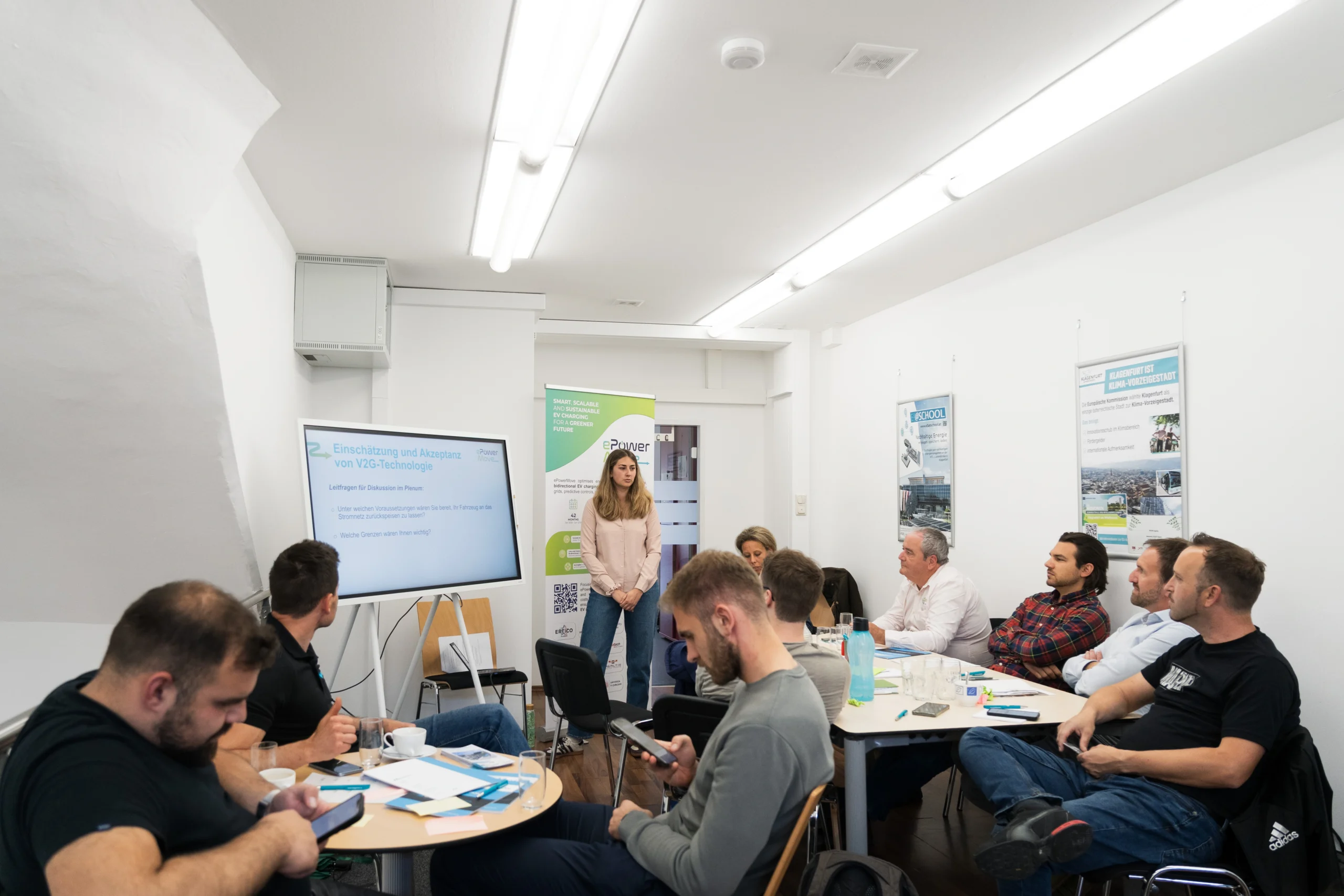
The Klagenfurt pilot is progressing steadily despite its relocation. The pilot has been moved to a strategic multimodal hub near the main railway station. This new location provides key testing opportunities, as it´s a central area for commuting and other public transport access.
On the technical side, hardware and software developments are progressing. Work is currently focused on finalising ISO 15118-20 compliant systems, preparing installation plans, and coordinating grid access. In parallel, the team is developing load forecasting tools to better manage energy demand and optimise charging operations.
The pilot now prepares the infrastructure installation, prototype testing, and regulatory setup, while advancing the development of smart grid integration tools. The co-design workshops and the successful certification of charging solutions have set a solid ground for the implementation phase.
Nicosia: Advancing towards integrated charging and energy systems
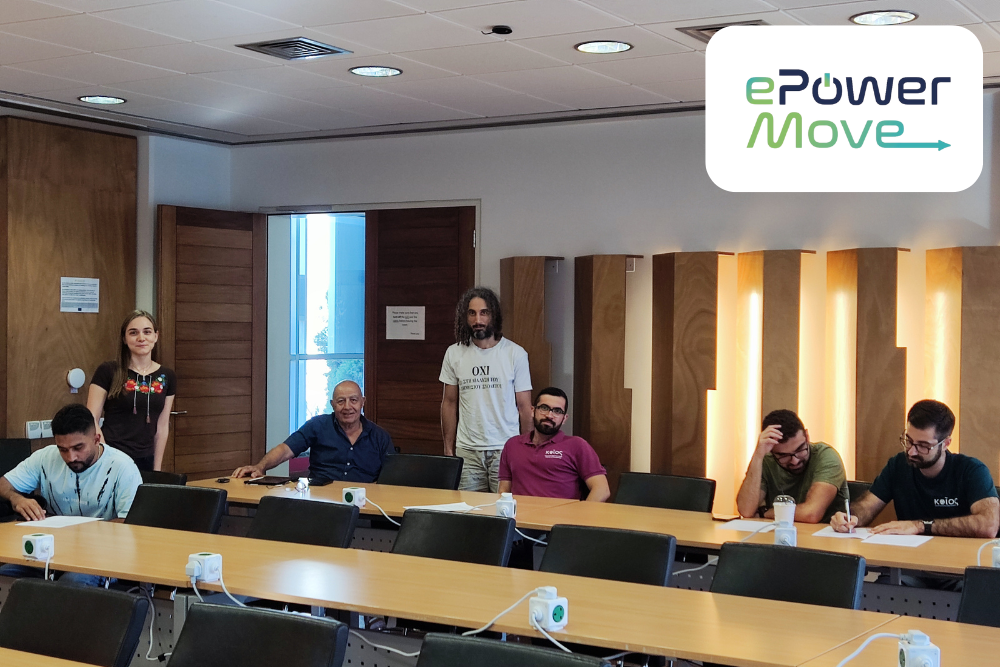
The Cypriot partners, on their side, are finalising the technical and electrical groundwork needed to support the EV charging deployment. The team is completing the electrical study and defining the requirements for expanding the electrical installation and infrastructure needed to support EV chargers that meet the project’s advanced functionality requirements.
As in the other two pilots, a key challenge remains the limited availability of V2G-enabled chargers and compatible vehicles. The Cyprus pilot is also seeking manufacturer support for integration.
With infrastructure expansion, procurement of charging equipment, and installation in place, the pilot will move into the demonstration phase.
A common goal
The ePowerMove project is testing its innovation in different locations to adapt to a variety of needs, weather conditions and sociocultural contexts. However, these first months have shown common challenges, mainly around technology readiness and market availability of V2G solutions.
At the same time, all three sites demonstrate strong progress in turning user needs into practical solutions, supported by close collaboration with citizens and local stakeholders.
As ePowerMove moves closer to the demonstration phase, these pilots will play a crucial role in validating how smart, bidirectional, and user-centric charging can work in real-life conditions.