Over the past decade, the number of EV owners has moved from a few daring users committed to sustainability to the mainstream. An ACEA report from early 2026 reported that battery electric vehicles (BEVs) outsold pure petrol cars in the EU for the first time in December 2025. This is already an important milestone in Europe’s transition to greener mobility, but the full potential of these vehicles is yet to be unlocked. EVs consume electricity, but they can also support the energy system.
Through bidirectional charging and Vehicle-to-Grid (V2G) technologies, EVs can store energy and feed it back into the grid, helping reduce costs and pressure on the grid.
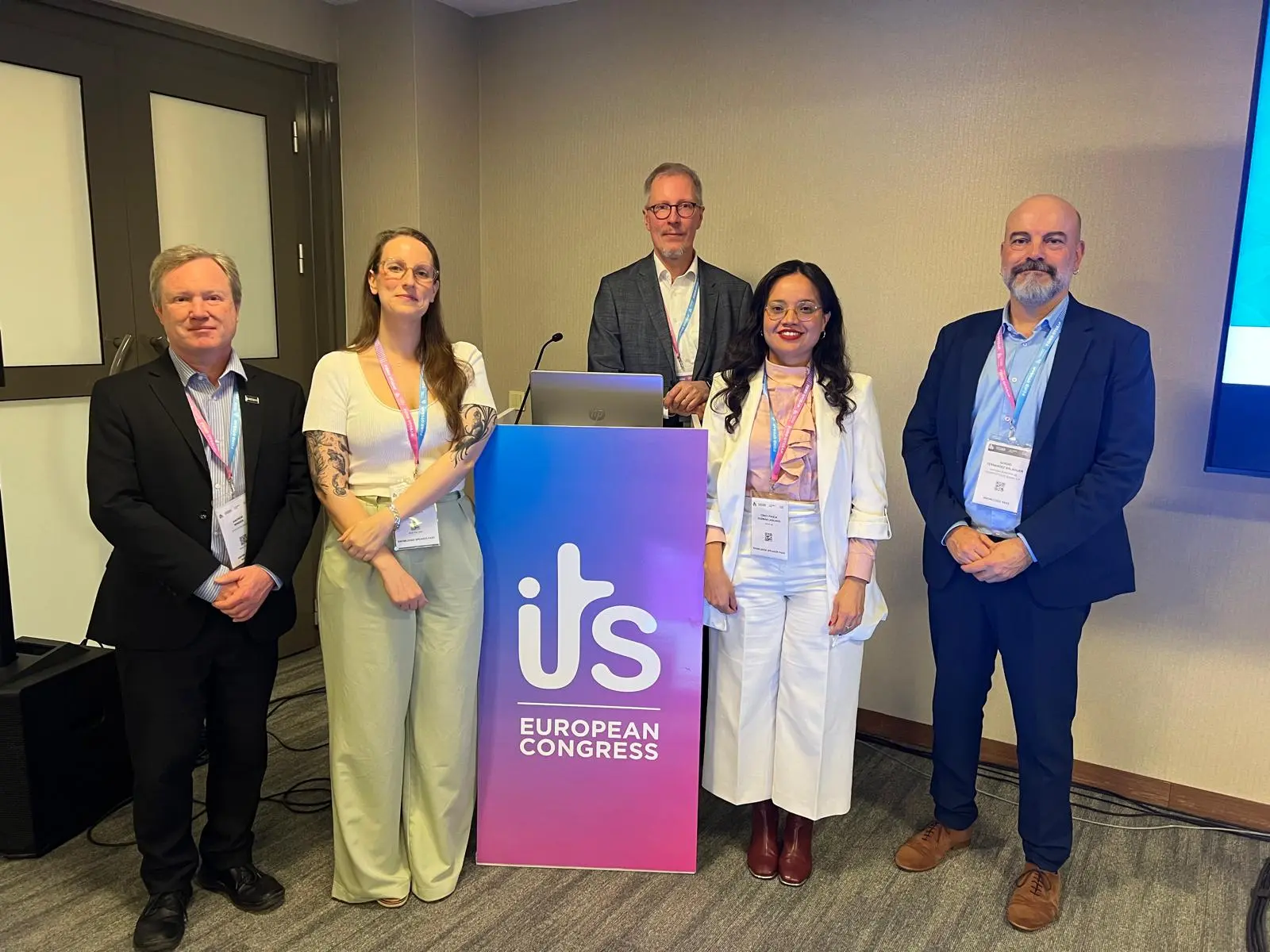
These opportunities, but also the remaining challenges that need to be solved before generalised commercialisation becomes a reality, were part of the discussion at the recent ITS European Congress.
Where ePowerMove steps in
The ePowerMove project is developing charging solutions that are not only technically efficient, but also low-cost, inclusive and designed around real user needs. Presented by Project Coordinator Andrew Winder (ERTICO ITS-Europe), ePowerMove highlighted that the future of charging is not just about hardware or software, it is also about trust, accessibility, affordability and public acceptance.
The project is also actively engaged in the V2X Cluster, a collaborative ecosystem of EU-funded projects working together to accelerate smart, interoperable, and user-centric charging solutions across Europe.
During the session, Marko Paakkinen (VTT) shared insights from the Helsinki pilot, testing smart charging in a residential urban setting. The pilot is exploring new charger designs that are less visually intrusive and more inclusive for all users. Residential charging also offers strategic advantages. To participate in local flexibility markets, a sufficiently large fleet of connected vehicles is needed. In public charging spaces, that pool can be harder to build. In residential areas, users with dedicated parking spaces can more easily participate, while neighbours and communities can be engaged over time.
Why AC Bidirectional Charging Matters
Another important discussion point was the role of AC bidirectional charging. For passenger cars, AC charging can offer lower total system costs because part of the charging hardware is already in the vehicle. This can make deployment more affordable and scalable, particularly in urban and residential environments.
However, market readiness and further standardisation remain a challenge. Vehicle support for AC V2G is still limited, and some manufacturers are prioritising DC charging. Business models will need to mature to encourage wider adoption.
Shared challenges across Europe
Speakers from other initiatives shared common challenges: limited vehicle availability, regulatory uncertainty, infrastructure complexity, and user mistrust. Cindy P. Guzman shared insights on scalable V2X optimisation strategies from the EV4EU project, while Sergio Fernandez Balaguer (EMT) brought the public transport operator perspective, highlighting how regulation still limits feeding energy back to the grid.
But there is also a brighter side. Electric mobility is opening the room for emerging opportunities, from residential flexibility schemes to bus depots evolving into local mobility and energy hubs. In a hopefully not-so-distant future, EVs will not only be a sustainable choice to reduce diesel-fuelled vehicles, but a smart and green choice that will alleviate stress on the electric power grid.