ePowerMove debuted at the leading event on Intelligent Transportation Systems (ITS). ERTICO, the project coordinator and organiser of the event, represented the project in an insightful Special Interest Session that examined users’ perceptions of electromobility and provided insightful information to dismantle extended misconceptions about EVs.
Clean, resilient and connected mobility. That was this year’s theme of the 16th ITS European Congress. Sustainable mobility was a central topic at the most attended edition. As part of the European Union’s push toward climate neutrality, underpinned by initiatives like the Fit for 55 package, expanded charging infrastructure, and stricter CO₂ emission standards, the Congress brought together research, deployment, and public policy in an unprecedented showcase of cooperation and knowledge exchange. However, scepticism around e-mobility remains among users.
Special Interest Session 37 brought together leading EU-funded projects and experts to explore how user behaviour, perception, and engagement are shaping the future of electromobility. From debunking persistent myths to showcasing cutting-edge charging solutions and business models, the session highlighted the essential role of users in driving the shift toward clean, connected, and zero-emission transport.
From insight to action: EU projects shaping the future of e-mobility
Beyond shedding light on some of the concerns around electromobility, the session also showcased practical solutions and success stories. The completed eCharge4Drivers project contributed valuable insights and takeaways from their booking, planning services, and user-oriented charging solutions.
Raphael Heliot (e-Mobility Europe, ePowerMove partner) presented the Flow project, which tests, validates, and enhances user-centric V2X smart charging solutions. He shared relevant data indicating that most EV users charge their vehicles at private locations such as homes and offices, a trend that aligns well with V2X technologies. This is particularly beneficial for users with solar panels, allowing for greater energy efficiency and self-consumption.
Emin Aliyev introduced ePowerMove, which is advancing EV charging with smart, low-cost, bidirectional solutions. Through its three pilots, ePowerMove aims to develop adaptable solutions tailored to diverse sociocultural, geographical, and climatic contexts. The project will deliver scalable outcomes, including dedicated apps, smart energy and grid synergy frameworks, advanced digital tools and data models, and innovative V2G business models geared toward market readiness.
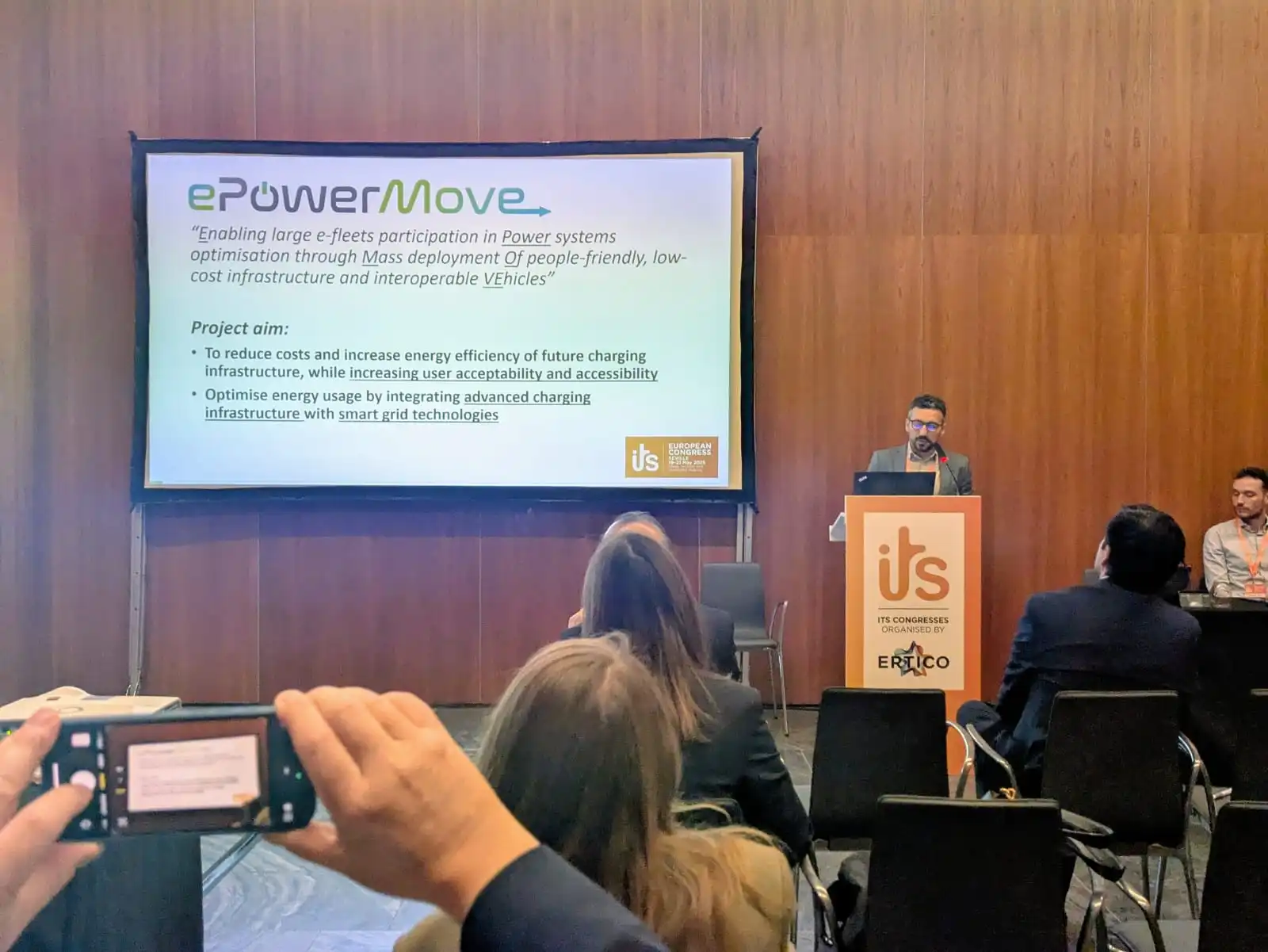
Finally, Frida Kuhl presented the Battery2Life project, which is rethinking the Battery Management System (BMS) to extend battery life and support circular economy principles in electromobility.
Covering the full scope of e-mobility, from the charging infrastructure to the vehicle itself, the session also featured a presentation of the ZEV-UP focused on the vehicle side, addressing a fundamental question: Why would someone choose to buy an EV? Among the reasons: smaller batteries mean shorter charging times and increased convenience when it comes to parking.
Empowering users: the key to a successful green transition
Despite remaining scepticism, often fuelled by misinformation, EV sales continue to grow, and outdated concerns like range anxiety are rapidly diminishing. Legislation is stepping in to incentivise adoption, but as many speakers noted, real change comes when users are not only supported but empowered. If customers are incentivised, they will make use of the technologies. They are at the centre of everything, and that is why they must be an active part of this green transformation.
The ITS European Congress made it clear: projects like ePowerMove are not isolated experiments, but part of a broader shift toward a sustainable, competitive, and climate-resilient transport ecosystem.
Accompany the ePowerMove team on this journey and help us co-design and shape inclusive charging solutions.